Rethinking Inbound Capacity and Staffing Models with Voice AI

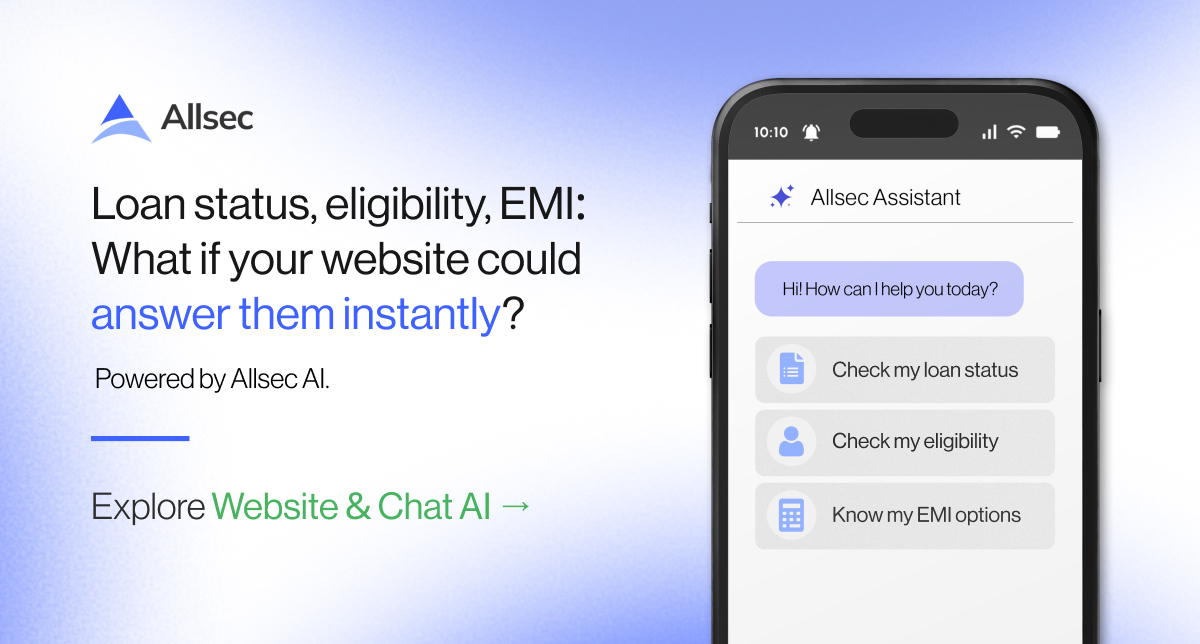
A large number of inbound calls to a lending business ask for the same handful of things – the status of an application, what the next EMI looks like, what’s still outstanding, or which document is missing. Simple, predictable, and repeatable requests that are based on available data sitting inside the lender’s own systems.
The same support line also carries billing disputes, process delays, and documentation issues that genuinely need investigation. Even with IVR routing calls to the right queue, agents today continue to spend time manually retrieving basic account information for routine queries. A borrower checking for their application status needs the current position and next steps. Someone asking about an EMI needs figures specific to their account. A prospective borrower asking about eligibility needs enough clarity to make decisions. Each situation comes down to a clear operational requirement – getting relevant information into the conversation at the point it’s needed.
Most lenders treat inbound volume as a staffing problem and optimise containment, when the number that actually decides the borrower's experience is resolution.
The opportunity in inbound CX is to resolve routine calls without using human agent capacity
By moving routine borrower servicing into the call itself, with AI accessing the relevant account information in real time, lenders can redirect that capacity towards other complex cases already waiting in queue.
The Self-Resolving Call
In operational terms, agentic AI manages non-voice interactions while voice AI resolves incoming calls, with both systems accessing shared account records. During an inbound engagement, the system validates the caller and pulls up their account in real time. This enables the interaction to handle common account-level requests such as application status, EMI due dates, outstanding balances, interest statements, and foreclosure details.
The same capability also supports prospective borrowers. An eligibility call can follow a structured conversation that guides the caller toward an application or a scheduled callback with the sales team. What previously required manual account retrieval and hold queues is now resolved instantly within a single interaction.
However, not every call is routine. A billing dispute, process delay, or documentation issue needs to be recorded, categorised, and routed correctly. Here, the AI can receive and categorise these complaints, attach the full call transcript to the ticket, and route it to the appropriate team. The borrower receives an acknowledgement and an expected resolution timeline before the interaction ends.
When specialist attention is required, the conversation moves to the appropriate human agent with its context preserved. The borrower continues from the point already reached, with the information already captured.
Beyond Containment
Designed and deployed well, the expected impact is measurable:
- 80–90% inbound call containment: Routine calls resolved by AI alone.
- No hold queue, and effectively, no abandonment: AI handles calls on demand.
- 24/7 availability: Support runs through nights, weekends, and public holidays.
- Full call visibility: Every call is transcribed, scored, and available for audit.
For a lending operation, this changes the relationship between call volume and agent capacity. Routine inbound demand is absorbed through AI, while specialist teams focus on investigations, exceptions, and cases that require judgement.
Containment becomes an operational efficiency metric. Resolution becomes the borrower's outcome